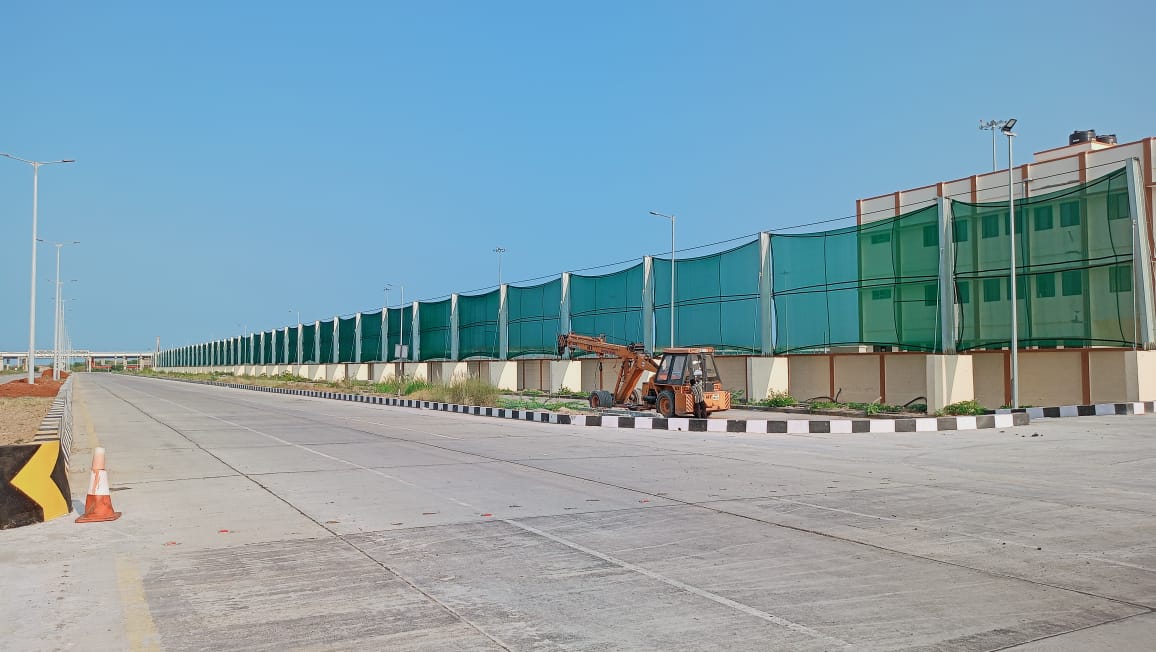
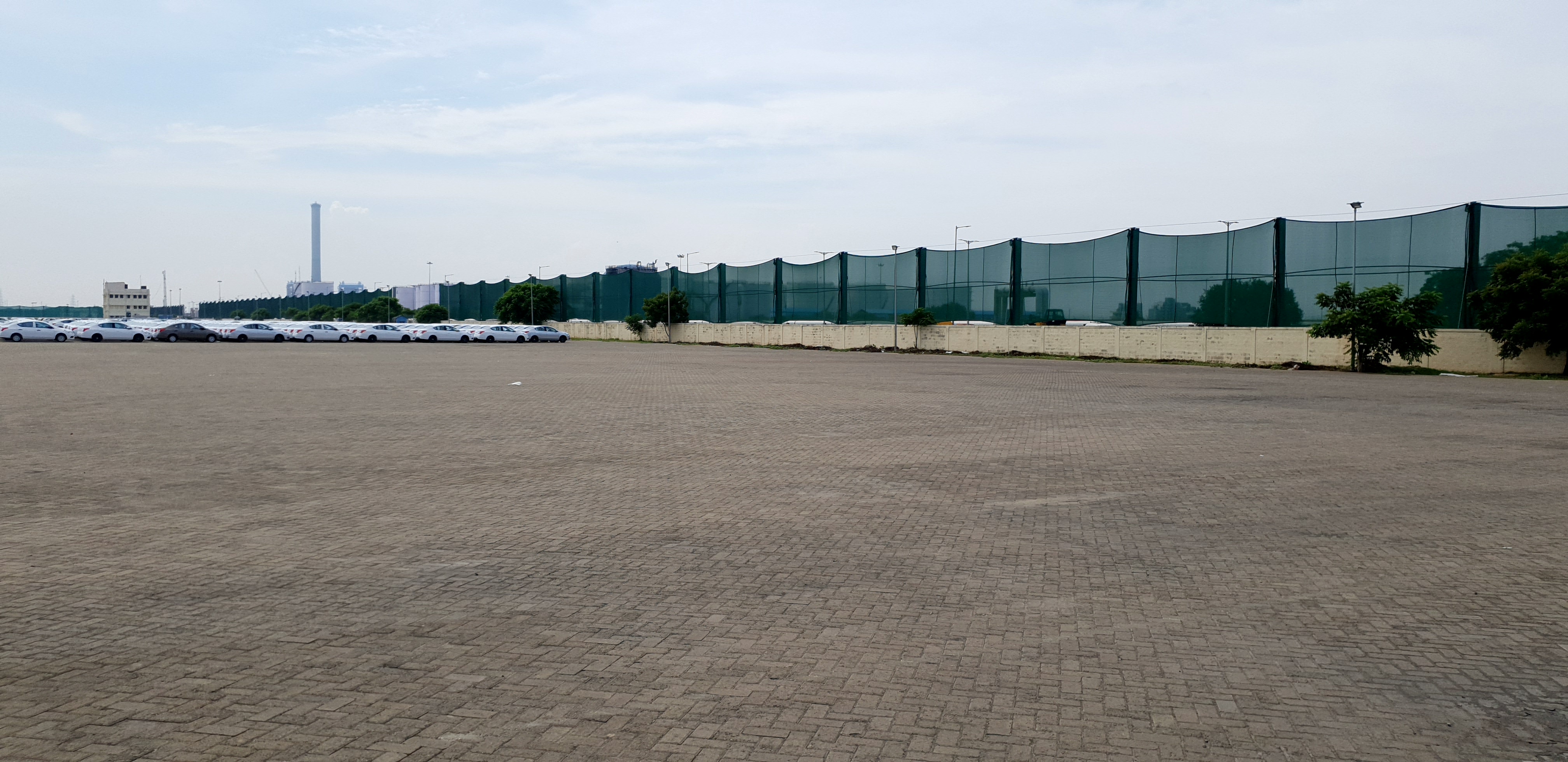
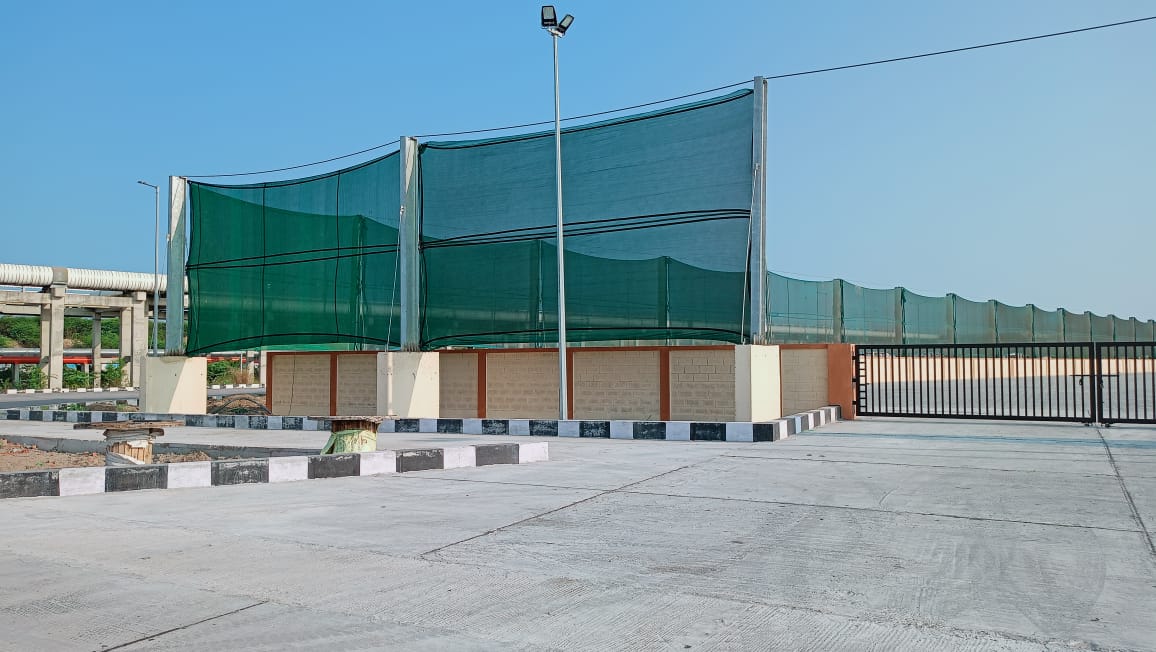
Dust Control Fencing Manufacturer
Dust control fencing works on a simple physical principle: a partially-porous barrier placed across the prevailing wind direction slows wind speed enough to drop suspended dust before it leaves the site boundary, without creating the turbulence a solid wall would generate downwind. Superspan India engineers and installs these wind fences for coal yards, mining operations, cement plants, ports and any open storage site where dust escape is a compliance and neighbourhood issue.
How dust control fencing actually works
The detail that separates an effective wind fence from a wasted budget is porosity – the percentage of open area in the fence panel. A solid wall blocks wind directly at the barrier but creates strong turbulence and eddies on the leeward side, which can lift dust right back into the air. An engineered fence at roughly 30–50% porosity slows wind velocity by 50–75% while avoiding that turbulence, which is what actually keeps particulate matter grounded. We calculate porosity, panel height and fence orientation from your site's wind-rose data and stockpile layout, not a standard percentage applied everywhere.
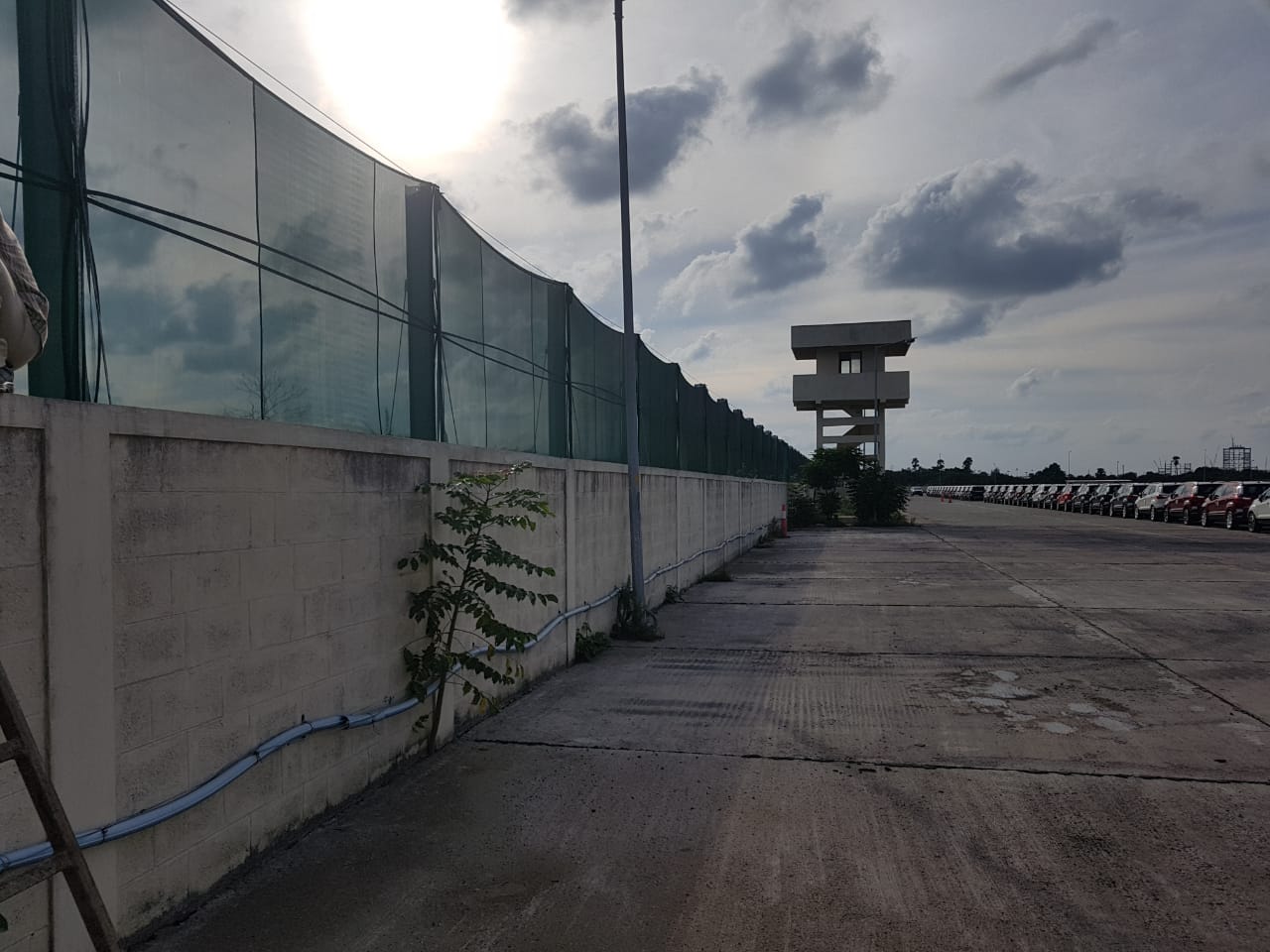
We Provide High Strength, World‐Class Premium Dust Control Solutions
Where dust control fencing gets installed
Coal stock yards, coal handling plants and coal beneficiation units; sea-side and port coal storage yards, where onshore wind is a constant factor; mining sites and material handling zones; cement, gypsum and fly-ash storage yards; solar panel installations, where dust settling on panels directly reduces output; air-cooled condenser installations, where uncontrolled wind affects gearbox and fan performance; and construction sites needing perimeter dust compliance.
Specifications
- Material: high-density polyethylene (HDPE) fabric or perforated galvanized steel panel, depending on site exposure.
- Porosity: engineered per site, typically 30–50% for optimal dust suppression without turbulence.
- Height: sized to stockpile height and wind-rose data – coastal and high-exposure sites generally need taller, lower-porosity configurations.
- Frame: hot-dip galvanized steel posts and bracing.
- Breakaway design: fabric detaches at top and bottom fixing points during extreme wind events, then reattaches in minutes once the storm passes – this protects the fence instead of forcing a full panel replacement after every major storm.
- Maintenance: periodic tension adjustment and panel inspection; no power or ongoing operating cost, unlike water-spray dust suppression systems.
Dust fencing versus other suppression methods
Water sprays and chemical suppressants work, but only for as long as they're actively running, and they carry a continuous water and power cost. A properly engineered dust fence works passively, 24x7, with no operating cost and no water use – which matters in water-stressed regions and at sites where continuous spraying isn't practical around stockpile handling equipment.
Regional delivery: Ghaziabad, Chhattisgarh, Jharkhand and beyond
We've supplied and installed dust control fencing for clients across Ghaziabad and the wider NCR industrial belt, Chhattisgarh's coal and mining corridor, and Jharkhand's coal handling plants – three regions with genuinely different wind and dust profiles, which is exactly why we don't ship the same panel spec to all three. A Ghaziabad industrial site and a Chhattisgarh coal yard get different porosity and height calculations because the wind data is different. If you're sourcing a dust control fencing manufacturer or supplier in any of these regions, our design team can work from your site's specific stockpile layout and compliance requirement rather than a generic national spec sheet.
Why Superspan India
Over 25 years manufacturing weather-protection membranes and windbreak systems, with dust control fencing engineered project-by-project against site wind data rather than sold off a catalogue. Every installation comes with our standard warranty and a maintenance schedule built around your site's actual exposure. Send us your stockpile layout, wind-rose data if you have it, and compliance requirement, and we'll come back with a fence height, porosity and layout recommendation.