Tensile Canopy Structure Manufacturer in India
For more than 25 years, Superspan India has been engineering and manufacturing tensile canopy structures for clients who need large-span, weatherproof roofing without the cost or build time of conventional construction. Everything - design, fabric fabrication, and installation - happens under one roof at our Ghaziabad facility, then travels with our own crews to the job site. We don't outsource fabrication and we don't subcontract installation, which is a smaller point than it sounds: it's the reason a canopy we install in year one still performs the way it was designed to in year fifteen, because the same team that calculated the load is the one that welded the seams.
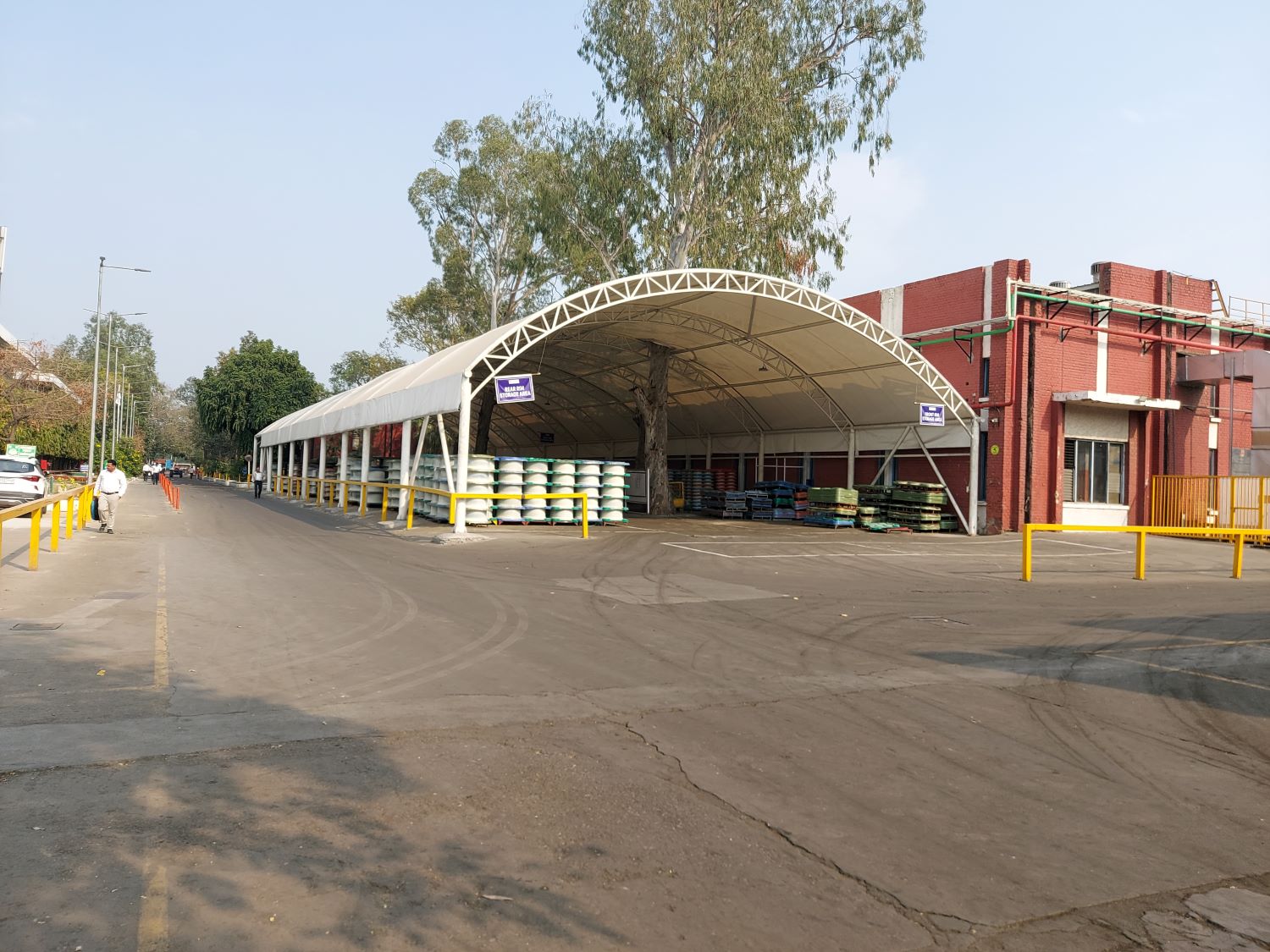
A tensile canopy isn't a stretched-out tent, even though the two get confused often enough that it's worth spelling out the difference. A tent is a temporary structure rated for weeks or months. A tensile canopy is architectural fabric pulled taut across a calculated system of steel or cable anchor points, engineered the same way a conventional roof would be - for wind loading, snow or hail loading where relevant, and structural fatigue over a multi-decade service life. Done right, it holds up for 15 to 25 years with minimal upkeep, which is why it's become the default choice for car parking, warehouse roofing, aircraft hangars, and large public spaces across India rather than a niche or purely decorative option.

We Provide High Strength, World‐Class Premium Quality Shade Solutions
Why tensile over conventional roofing
The honest answer is: not always. For a fully enclosed, climate-controlled building, conventional construction is usually still the right call. Where tensile structures win is anywhere you need to cover a large open span quickly, cheaply relative to steel-and-concrete alternatives, and without the multi-month construction timeline that conventional roofing requires. A car parking shed, a warehouse loading area, an aircraft hangar, or an event space can typically go from signed design to installed structure in a fraction of the time a masonry equivalent would take, at a lower cost per square foot for equivalent coverage.
How a Superspan project actually runs
Most manufacturers quote off a catalog of standard spans and shapes. We don't have one, because it doesn't hold up in practice - a canopy spanning a Chhattisgarh steel yard has almost nothing in common, structurally, with one covering a Noida residential parking lot, and pricing or engineering either off the same template produces a structure that's either overbuilt and overpriced, or underbuilt and unsafe. Every job starts with a site visit and a load calculation specific to that location's wind zone, usage pattern, and span requirements.
Once the design is signed off, the membrane - PVC-coated polyester for most commercial and budget-driven applications, or PTFE-coated fiberglass where longevity and heat/dust resistance matter more than upfront cost - is cut and welded at our facility under quality control, not sent to a third-party fabricator. Our own installation team then handles the on-site build.
Where we work
Superspan India ships and installs nationally, with dedicated regional pages for the areas where we have the deepest project history and fastest response times:
- Ghaziabad - home to our manufacturing facility, and our fastest-turnaround region
- Noida - car parking, logistics, and commercial projects across Noida and Greater Noida
- Chhattisgarh - industrial dust control and shading for the steel and power sector
- Odisha - mining, steel, and port-adjacent installations
- Jharkhand - steel and coal-sector industrial structures
Each of those pages covers our full product range for that specific region - hail netting, dust control fencing, shade sails, German hangers, and more. This page focuses specifically on tensile canopy structures, which is our core product across every region we serve.
What you get with a Superspan tensile canopy
- Structural design calculated for each site, not pulled from a standard template.
- PVC-coated polyester or PTFE-coated fiberglass membrane, selected based on your load requirements and expected lifespan.
- 10-year warranty with an expected structural life of 15–25 years, depending on the fabric grade.
- Complete in-house fabrication and installation, carried out by our own experienced teams.
- Over 30 years of industry leadership in tensile architectural solutions.
- Complete in-house capabilities for design, engineering, fabrication, and construction.
- Custom-designed solutions for industrial, commercial, and residential applications.
- Specialized expertise in dust control fence systems, weather-protection structures, and innovative shade solutions.
- Recognized as one of the largest tensile canopy structure manufacturers in Jharkhand and across India.
- Virtually maintenance-free, energy-efficient structures designed to maximize natural light and reduce energy costs.
Where tensile canopies get used
Car parking sheds, industrial and warehouse roofing, aircraft hangars, walkways and entrance canopies, stadium and event roofing, and commercial plaza covers are the most common applications we build for. Each comes with a different engineering emphasis - an aircraft hangar canopy has different clearance and wind-load requirements than a plaza cover, for instance - which is part of why the site visit and custom calculation matters more than it might seem to from the outside.
FAQ's




© 2026 Superspan India. All Rights Reserved. Developed by 9tech Services.