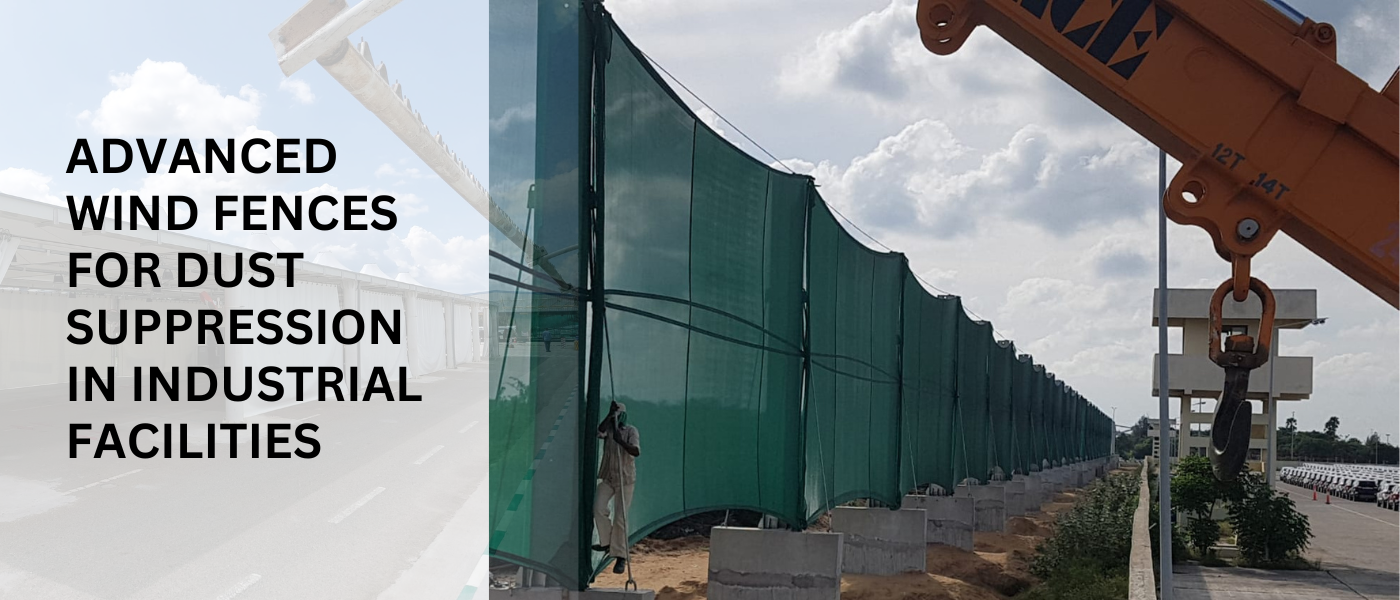
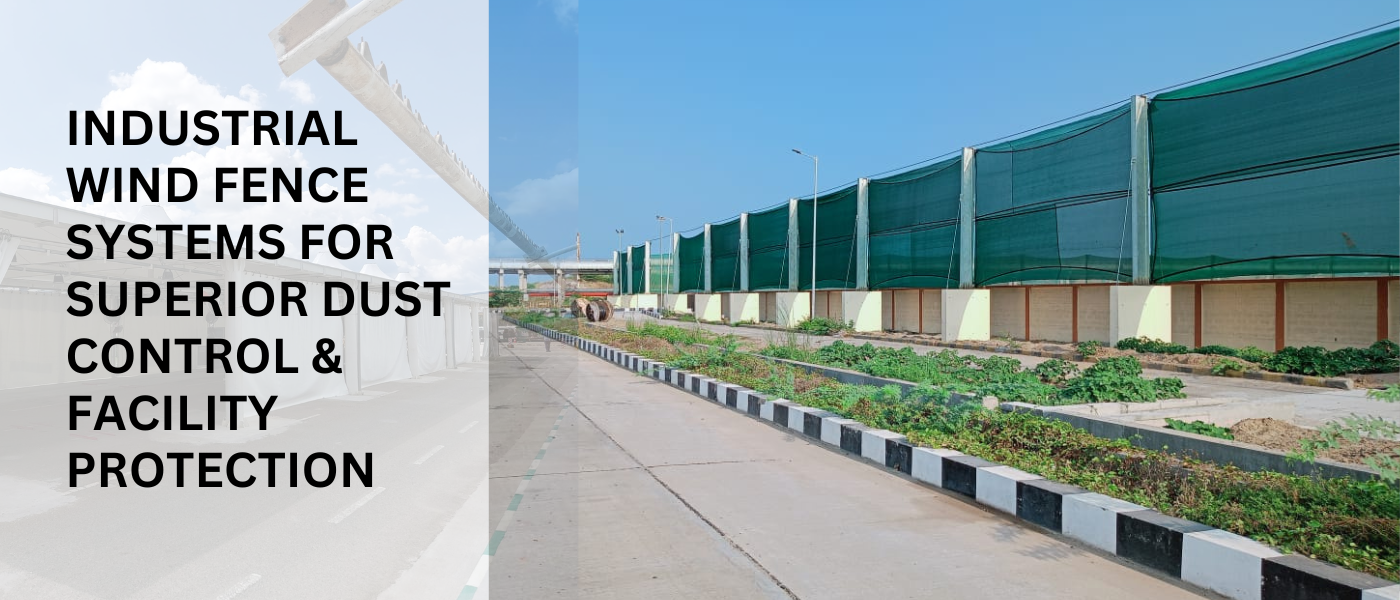


Industrial Wind Fence Systems for Dust Control & Facility Protection
Fines (small industrial particles) become airborne based on wind velocity and site conditions. These particles pose hazards of all kinds and adversely affect surrounding communities. Wind has a significant effect on the transport and dispersal of particulates generated from industrial activities. While it is impossible to eliminate dust completely, it can be controlled through the careful design of industrial installations, combined with the use of wind fences to direct and control its dispersal.

.png)
.png)

.png)












What is an Industrial Wind Fence?
Industrial wind fences can best be thought of as semi-permeable screens that are erected at a specific angle to the predominant wind screen at a site during the design of new installations. Wind fencing systems are designed to assist industrial businesses like the Mining, Cement, Steel, Port, and Power Plant industries in effectively addressing dust dispersal.
How Wind Fences Work
There are only two ways to manage airborne dust for environmental compliance: 1) Fines must not leave the site, and 2) Fines must not enter the site. Unfortunately, fencing is the only complete management solution. Dust control fencing and wind fence theory are based on the closure of air gaps to reduce the air flow rate from one side of the fence to the other. Therefore, the use of dust control fencing and wind fences for dust control is most effective when spaced tightly together.
Including fencing, walls, and bulkheads in an industrial installation can help contain the dust and particulates generated by the installation, as long as those structures are designed as vertical surfaces.
Applications of Wind Fencing Systems within Industrial Contexts
Widespread deployment of industrial systems for wind fencing has faced challenges of airborne dust, harsh wind conditions, and material wastage in many operational and environmental contexts. These wind fencing systems keep dust within limits, enhance safety within the workplace, and shield neighboring facilities. They are typically used in:
- Mining and quarrying
- Cement manufacturing
- Steel and metal processing
- Thermal power generation
- Ports and yards for handling bulk materials
- Coal yards and ash handling
- Construction and infrastructure projects
- Warehousing and storage
- Conveyor belt and loading zones
- Dust fencing to completely enclose stockpiles
Wind fencing systems for industrial dust control are focused on reducing wind speeds around materials and active areas, thereby being a viable option for effective industrial dust control and protection of the facility.
Dust Dispersion Prevention
Dust Dispersion Prevention systems are designed to reduce the spread of fine particulate matter caused by industrial activities. These systems are commonly used around stockpile enclosures and bulk material handling areas to minimize windborne dust emissions.
Wind Fence Theory
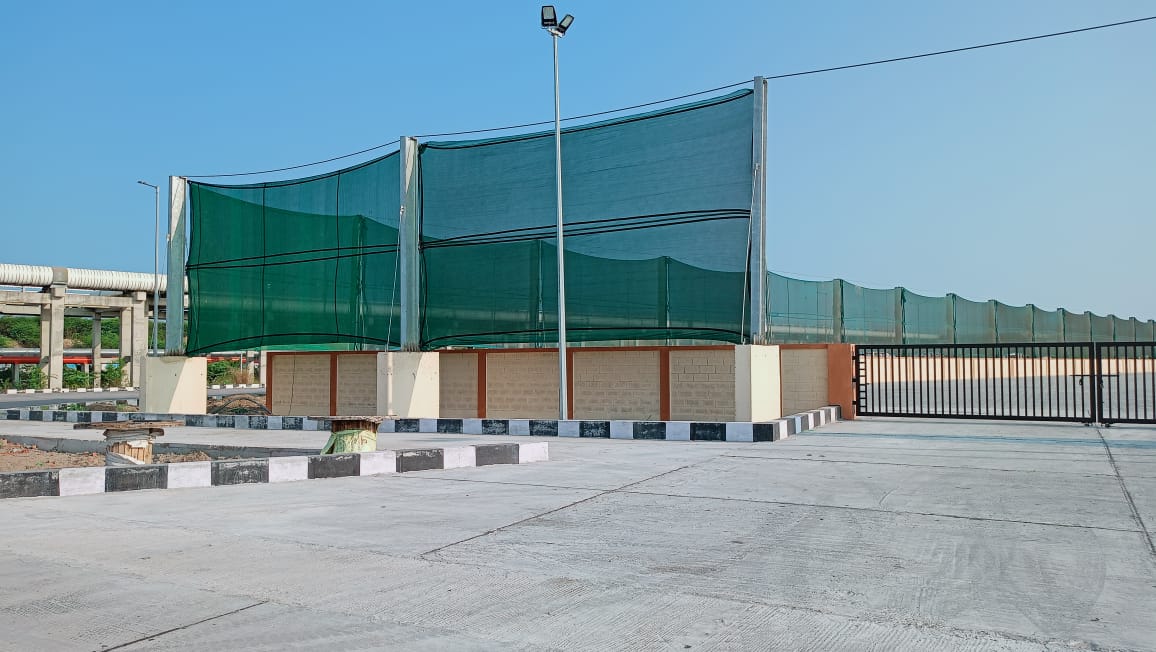
Using multiple wind fences in tandem constitutes Wind Fence Theory, a specialized design philosophy focused on dust and wind reduction. Perpendicular placement of wind fences creates a synergistic effect that enhances dust containment and improves overall airflow control across industrial facilities.

Airflow Reduction Principle
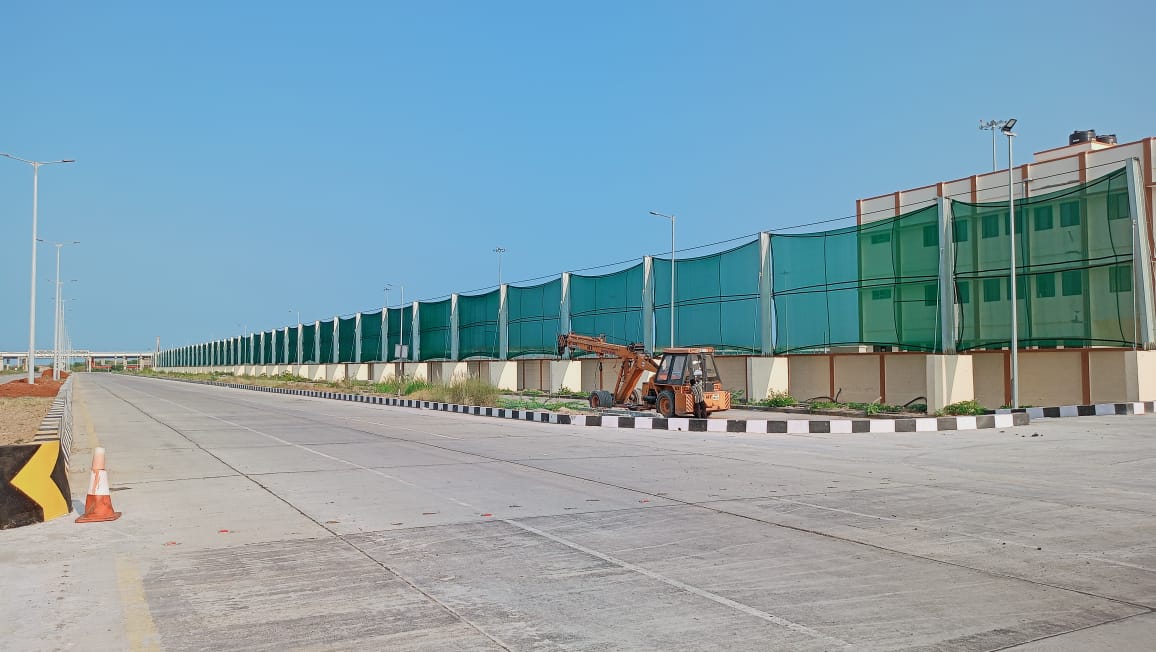
The Airflow Reduction Principle helps accommodate natural wind gaps and improves dust control performance. Multiple wind fences positioned perpendicular to airflow reduce turbulence and support effective backfilling of wind gaps for better containment.
Wind Velocity Control
Wind Velocity Control refers to reducing and managing airflow movement around industrial operations. Properly engineered wind fences help control dust movement, minimize airborne particles, and improve safety near stockpiles and active work zones.
We Provide World‐Class Wind Fence, Industrial Dust Control Solutions
Total Wind Reduction Systems
Super Span India designs and develop wind fences for dust control and facility protection. We design our dust control products to increase workplace safety, reduce dust pollution, and protect our users' compliance with the environment. These products also preserve the integrity of essential machinery and materials. Our fences will protect your facility from being seen and will reduce wind traffic. Wind fences for dust control will decrease dust pollution for each facility we service. We lead the industry as a dust control fencing manufacturer. As mining, cement plant, steel manufacturing, thermal power plant, and construction site industries grow, their dust control needs grow. Ports also develop their dust control and collision protection needs with a growing trade.
Benefits of Wind Fence Systems
- Helps keep your facility safe from the corrosive effects of dust.
- Keeps your environment and facility clean by shielding it from wind pollution.
- Protects employee safety in hazardous industrial environments.
- Protects costly machinery and infrastructure from dust-related damage.
- Assures that your business remains compliant with environmental standards.
Why Choose Super Span India
Super Span India is your #1 choice of wind fence systems. Specific needs for wind fence systems vary considerably, and We at Super Span India will develop products with design and quality to meet your needs. We are the only experts in the industry when it comes to wind fencing and dust control solutions.

Request
A Quote
For Business: Fill our enquiry form.
Call us: +91-9810080224, to get in touch with our experts.
© 2026 Superspan India. All Rights Reserved. Developed by 9tech Services.